

Sustainable development
Positive outcomes of coffee-growing and trading
The International Coffee Organization (ICO) regards the resulting ecological and social aspects of coffee-growing and trade as broadly positive, in contrast to many of the alternatives.
The international value-added chain often involves developing and emerging countries, where problems like child labour, absent or deficient state infrastructure or below-par working conditions and a lack of proper health and safety rules and environmental legislation are all prevalent.
Interest in the conditions under which coffee is cultivated has grown in the western industrial countries in recent years, with many end-consumers now paying attention to the sustainability of their coffee.
Procafé’s position
The Swiss coffee sector is interested in obtaining quality coffee from sustainable sources. It therefore welcomes all measures that support small farmers and cooperative structures in the production areas concerned, while particularly recognising efforts in the areas of education and training as key ways of preventing poverty and illegal working conditions.
Sustainability is a subject closely linked to the entire value-added chain, from the coffee grower right through to the end-consumer. Alongside their cooperation with organizations that promote trade in sustainably produced coffee, top names in the Swiss coffee sector therefore support sustainability initiatives that apply to the entire value-added chain. The companies concerned also apply their own initiatives designed to increase levels of sustainability.
When acquiring their green coffee, the member-companies of Procafé concentrate on known sources whose production conditions match, as closely as possible, the sustainability expectations of end-consumers.
Sustainability labelling is used as an eye-catching alternative to initiatives, projects and activities that work without such labelling, which can have a positive effect when applied in combination with other measures. A mere focus on labelling is nevertheless not enough, given the wide range of interest groups, initiatives and approaches in the area of sustainability, all of which represent the complexity of the challenges posed. Measures designed to strengthen economic, social and ecological sustainability therefore require a differentiated approach involving all relevant state and private-interest groups. The members of Procafé are in any case committed to constant improvement in the sustainable procurement of coffee.
The three aspects of sustainability
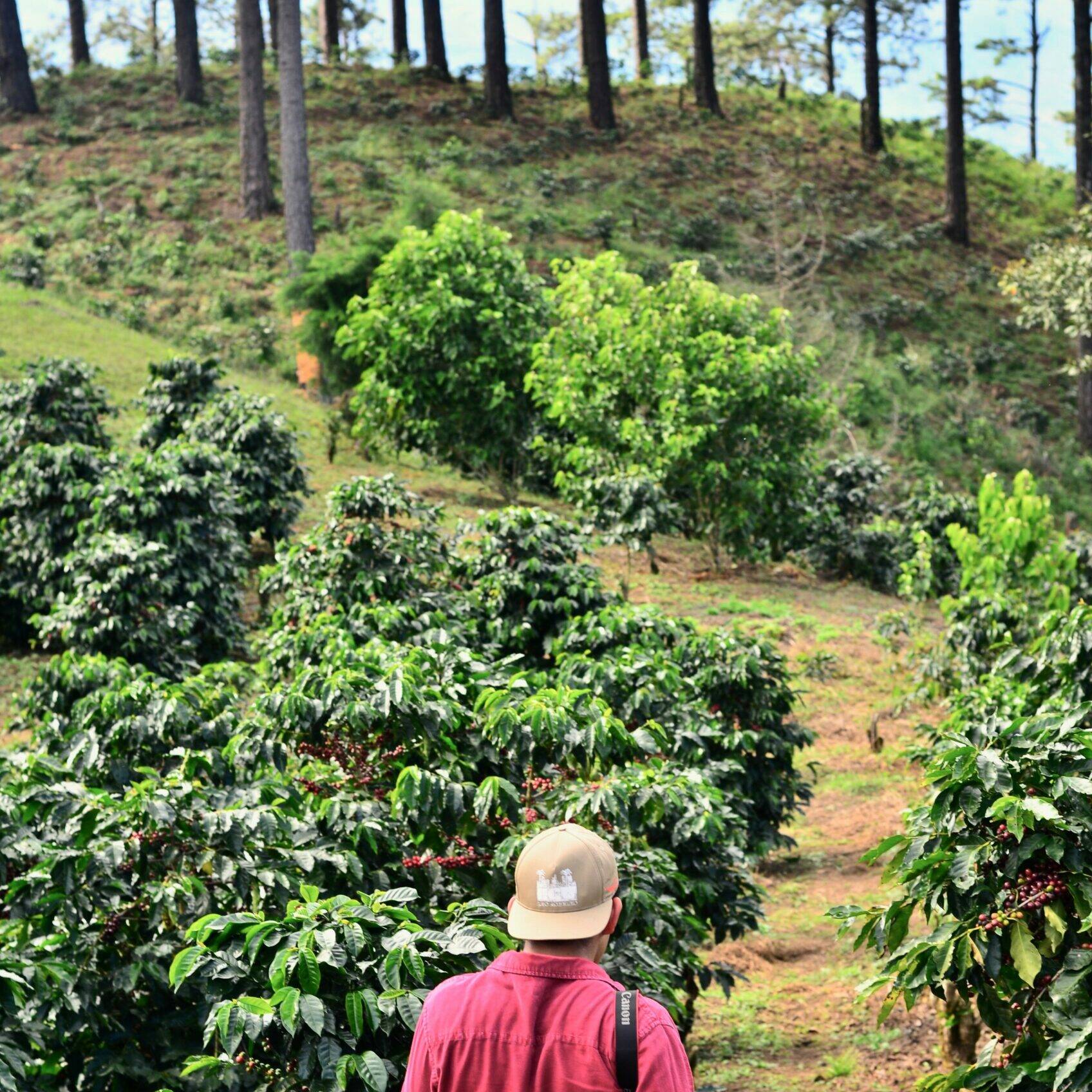
Sustainability can generally be regarded from economic, social and ecological points of view.
The economic sustainability of coffee
About 70% of the world’s coffee is produced by some 25 million small farmers, who have an interest in the market being stable. The price that farmers get for their coffee beans should represent their part of the value-added chain, while in any case permitting a dignified existence. The availability of sufficient supplies of coffee of a high and consistent quality is meanwhile a top priority of buyers and consumers, and price stability is likewise one of their key considerations.
The social sustainability of coffee
Coffee provides innumerable jobs in the countries where it is grown, while also helping to maintain community structures in the rural areas concerned. However, there are large country-specific differences in the social conditions of these farming regions.
When it comes to sustainability, the working conditions of those employed in the cultivation of coffee involve, for example, compliance with the standards of the International Labour Organization (ILO), and also protecting people from such dangers as the pesticides used in certain places.
One important challenge is the use of child labour. Children helping out in a family context is unproblematic, as it often likewise is in our part of the world. The decisive factor is whether they can attend school and enjoy enough free time, without being subjected to excessive demands or exposed to hazards. Clear requirements that need to be met include:
- The United Nations conventions on children's rights
- All the corresponding International Labour Organization (ILO) conventions
Above all:
- ILO Convention 138 (agreement on the permitted minimum legal age for working)
- ILO Convention 182 (prohibition of, and measures designed to prevent, the worst forms of child labour)
The environmental sustainability of coffee
The coffee plant contributes, as an evergreen shrub, to reductions in CO2. It can also contribute to soil stabilisation. Coffee plants traditionally grow under large shade-giving trees, which helps to preserve their natural habitat and maintain biodiversity.
There are also negative effects however, the extent of which depends on location and the method of cultivation, as well as the types of coffee being grown. These damaging factors are most prevalent when coffee is a monoculture. Such non-traditional growing methods lead to an increasing need for pesticides and artificial irrigation. The lion’s share of coffee is nevertheless still grown by farmers using traditional methods. The methods employed to process the harvested beans likewise have an impact on the environment. These include the use, in certain regions, of “wet” processing (where the pulp is removed from the bean by fermentation in water-filled tanks), leading to water contamination.
Promoting the sustainability of coffee
Switzerland has signed the International Coffee Agreement (ICA)
Switzerland is a signatory nation of the ICA. This forms the basis of the activities of the International Coffee Organization (International Coffee Organization, ICO). The organization provides a forum for intergovernmental consultation, trade promotion and a sustainable coffee economy, for the benefit of all stakeholders – particularly for small farmers in the places where coffee is grown. The agreement is therefore also instrumental in the field of development cooperation.
One important goal of the International Coffee Agreement is to encourage member-states to develop a coffee sector that is sustainable in economic, social and environmental terms.
...
The economic dimension of the ICO’s activities
The ICO supports efforts to enhance the quality of coffee, through projects designed to improve its cultivation, handling, processing, storage, shipping and marketing. The organization also promotes initiatives for reinforcing regional possibilities in the areas of certification and inspection.
The social dimension of the ICO’s activities
Capacity-building is an area where the ICO is particularly active in social terms. This includes the sustainable improvement of knowledge, skills, structures and systems in the areas where coffee is grown. The ICO also strives to improve access to finance and risk-management tools, as part of efforts to reduce the harm caused to small farmers by fluctuations in income. Another field of action is the equality of women.
The environmental dimension of the ICO’s activities
The ICO supports, with a view to reducing the consumption of water and preventing its contamination, pilot projects in Africa and Latin America that help farmers to apply technologies that are more eco-friendly.

Activities
Projects and initiatives
Most multinational companies have now launched, alongside other cross-company activities, their own initiatives for promoting sustainability. The most far-reaching of these programmes make sustainability a centrepiece of corporate strategy, with measures that are applied along the entire value-added chain. These range from cooperation with coffee-growers to the optimising of shipping methods and the disposal of waste.
Many companies are also committed – by way of international standards, industry codes of practice or even group-wide purchasing guidelines – to maintaining high social and environmental standards along their entire value-added chain.
The actual ability of business organizations to influence the supply chain therefore varies, depending mainly on the structure and complexity of that supply chain, as well as the company’s position within the market.
Several companies have turned sustainability into a permanent part of their value-added chain, while nevertheless not using the sustainability labelling of external certification bodies. Others work closely with such outside organizations. The Procafé website contains a summarised list of these external bodies.
THE SWISS SUSTAINABLE COFFEE PLATFORM (SSCP)
The SSCP is a joint project of Community of Interest Coffee Switzerland (CICS) and Switzerland’s State Secretariat for Economic Affairs (SECO).
Why do we need the SSCP?
Switzerland’s coffee sector currently has no central mission statement regarding sustainability issues or the use of legislative pressure in this respect.
This multi-stakeholder approach is an opportunity for
- exchange of knowledge and information on a pre-competitive basis
- smaller players to participate and access information
- creating transparency with regard to private-sector efforts in the area of sustainability
- consolidating insights and knowledge from the private sector, civil society and the scientific community
- sharing experiences with other commodity-centred platforms
Click here to download the PDF document
Sustainability labelling
Social-responsibility and eco-labels tell the consumer that the product concerned has been manufactured with a sustainable approach to environmental, economic and social criteria. These labels facilitate consumer choice, while helping suppliers to market themselves on the basis of sustainability.
The key labels in the coffee sector
The following sustainability labels are widely used (without this supposing any claims to completeness) in the coffee sector:
4C-Program

The 4C Code was initiated and formulated in 2003 as the Common Code for the Coffee Community in a multi-stakeholder process involving representatives of the coffee sector from producer and consumer countries and civil society.
The resulting 4C certification system, based on the 4C Code of Conduct, is a leading sustainability standard for the entire coffee sector. 4C focuses on good agricultural practices, including requirements for the economic, social and environmental conditions for coffee production and processing, in order to create credible, sustainable and transparent supply chains.
...
The inclusion of smallholder farmers is an important part of 4C certification, which is based on continuous improvement. The audits for 4C are carried out by independent, registered, and trained certification bodies to ensure the transparency and credibility of the certification. The 4C Portal enables the traceability of certified coffee along the supply chain.
Furthermore, 4C enables additional certifications for coffee producer groups that reduce greenhouse gas emissions in cultivation as part of the 4C Carbon Footprint Add-On, or that are more deeply committed to equality and human rights with the 4C Gender Equality Add-On and 4C Food Security Add-On.
Fairtrade Max Havelaar

Fairtrade Max Havelaar, originally set up in 1992, is a non-profit foundation based in Zürich. The organisation issues the Fairtrade label to products, such as coffee from Africa, Asia and Latin America, that are sold in Switzerland. Fairtrade coffee is sourced from more than 30 countries in these regions, where it is processed and fairly traded according to comprehensive social and ecological standards. Maintenance of these standards is subject to regular audits by the independent organisation FLOCERT.
...
Fairtrade’s fixed minimum prices and the Fairtrade Premium provide small farmers and local workers with improved incomes and better working conditions. Fairtrade also promotes democratic organisational structures and investment in coffee production and community projects. Sustainable cultivation in accordance with Fairtrade standards ensures the careful use of resources, and thus long-term viability for the farmers concerned.
Fairtrade Max Havelaar is an associate member, along with 24 other Fairtrade organisations and three producer networks, of the umbrella organisation Fair Trade International.
Rainforest Alliance

The Rainforest Alliance is an international non-profit organization working at the intersection of business, agriculture and forestry. Its aim is to create a better future for people and nature by making responsible business the new normal. By bringing diverse allies together, the Rainforest Alliance protects forests, improves the livelihoods of farmers and forest communities, while promoting their human rights, and helping them mitigate and adapt to the climate crisis in bold and effective ways.
The relative status of certification labels
The benefits of using certification labels in conjunction with other measures are well-recognised. But there is also some criticism:
The organising of farmers into common structures (such as cooperatives) is a prerequisite for certification. It has however been estimated that only 10% to 25 % of small coffee-farmers are organized into producer groups. Certification thus applies to the relatively low amount of low-hanging fruit, thereby excluding other coffee farmers.
There is also a certain lack of transparency, e.g. in terms of the effect and benefits of certification. The potential for improvement is seen, along with other factors, by comparing models of certification with sustainability initiatives launched by non-certified companies.
...
The leakage effect: Farmers sell part of the originally certified coffee as non-certified produce, to the extent that it is assumed that only about half of the coffee produced in accordance with certification requirements is also sold as certified coffee. Liquidity shortages are particularly likely to encourage coffee farmers to sell certified coffee through conventional channels. Multiple certification is another source of such leakage into other outlets, with farmers’ efforts to reduce dependence on a single buyer leading to them selling their coffee through various certified channels. As a result of this leakage effect, farmers selling via conventional channels lose their premiums, despite having invested in sustainable agricultural practices and the required administrative processes and audits. They can also incur unnecessary multiplication of costs, in the case of multiple certification.