

Harvest
Harvest
Main harvest seasons
The date for harvesting varies and is dependent upon the geographical position of the plantation, the climate, the height above sea level and the season in the area.
The ripe, deep-red coffee cherries are generally plucked by hand. Each arabica coffee tree yields between 500 and 1500 g of green coffee beans; for robusta trees the yield is between 500 and 2000 g.
Just how labour-intensive the harvesting is, becomes apparent when one considers that for every 500 g of coffee beans, 2500 g coffee cherries have to be picked.

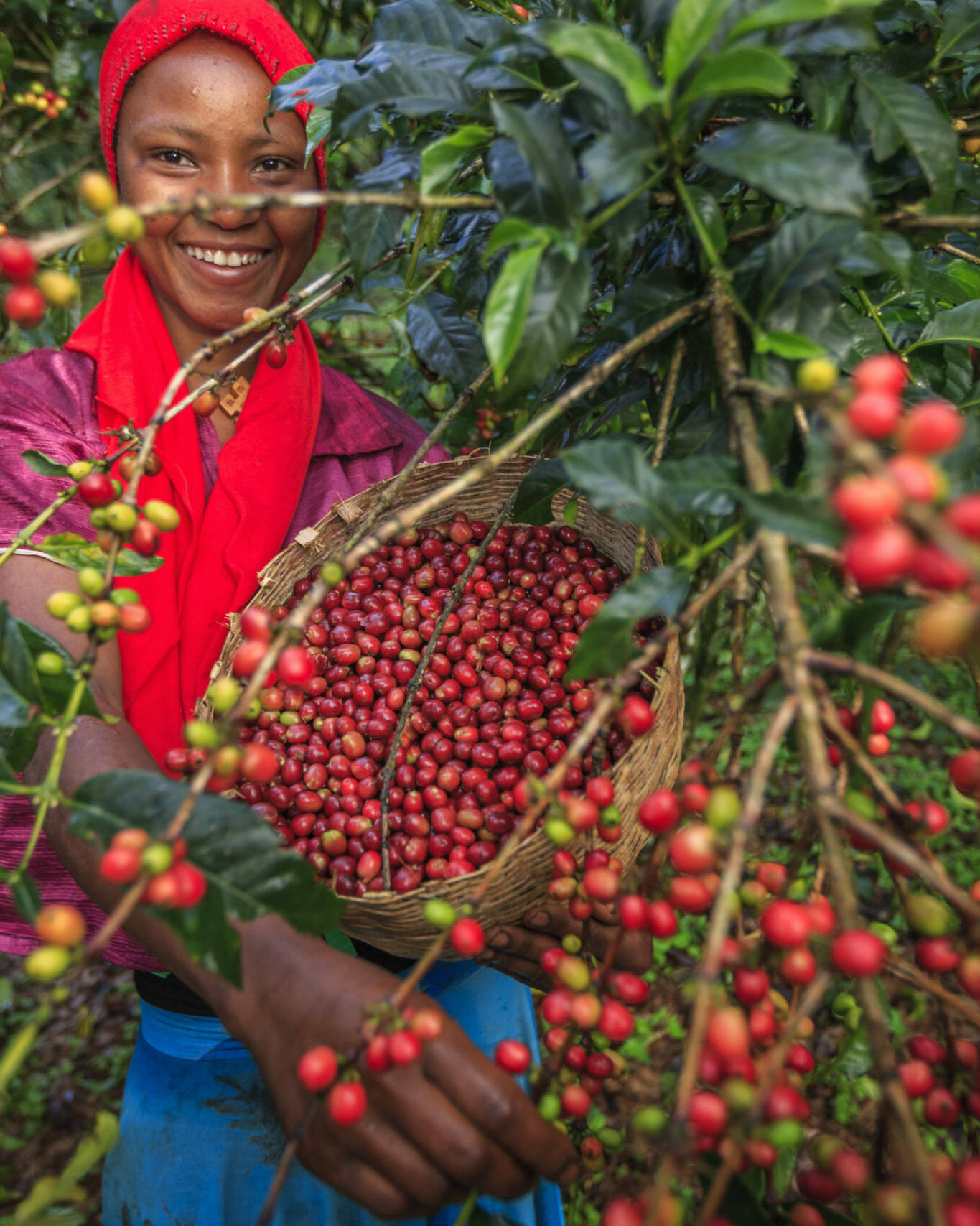
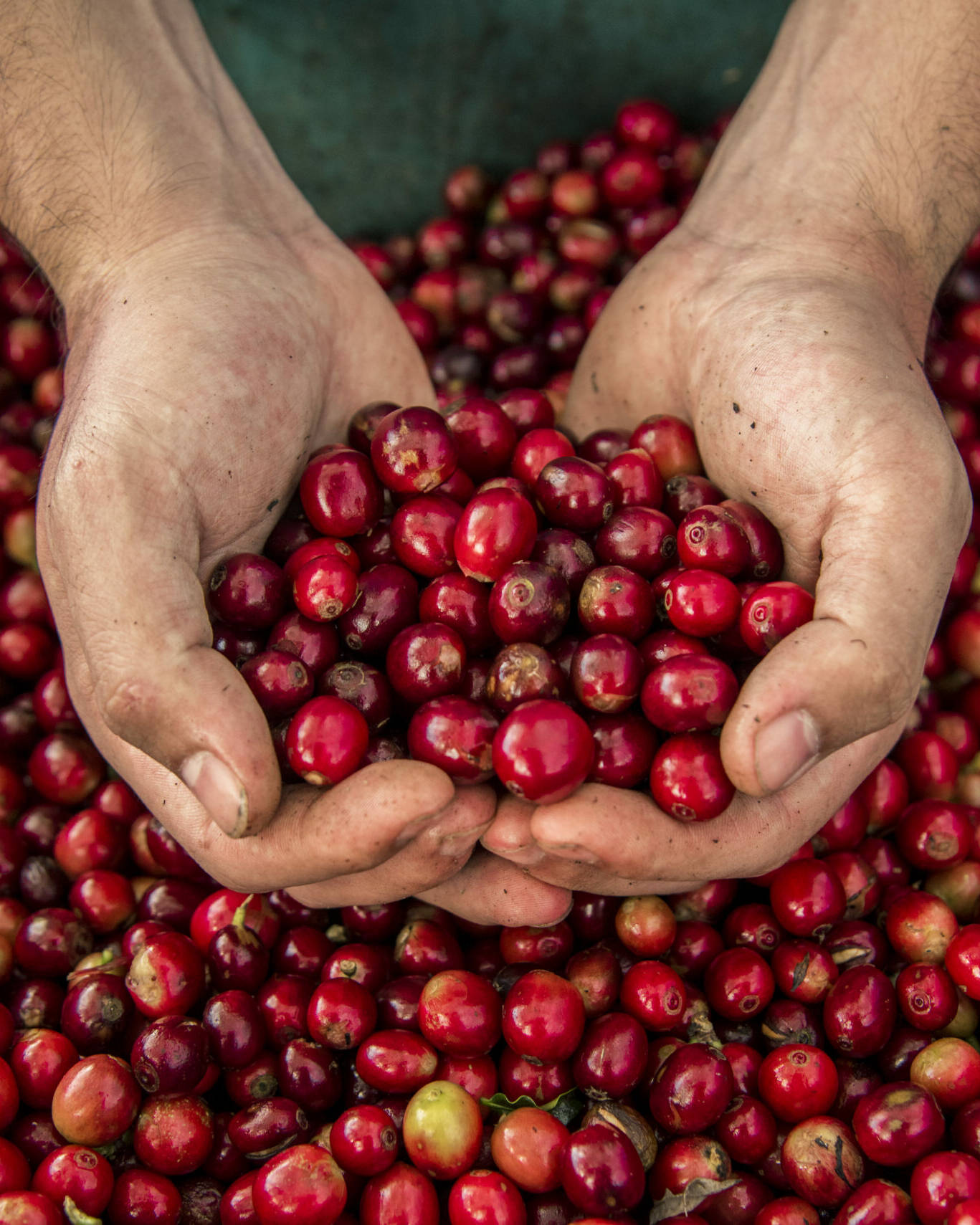
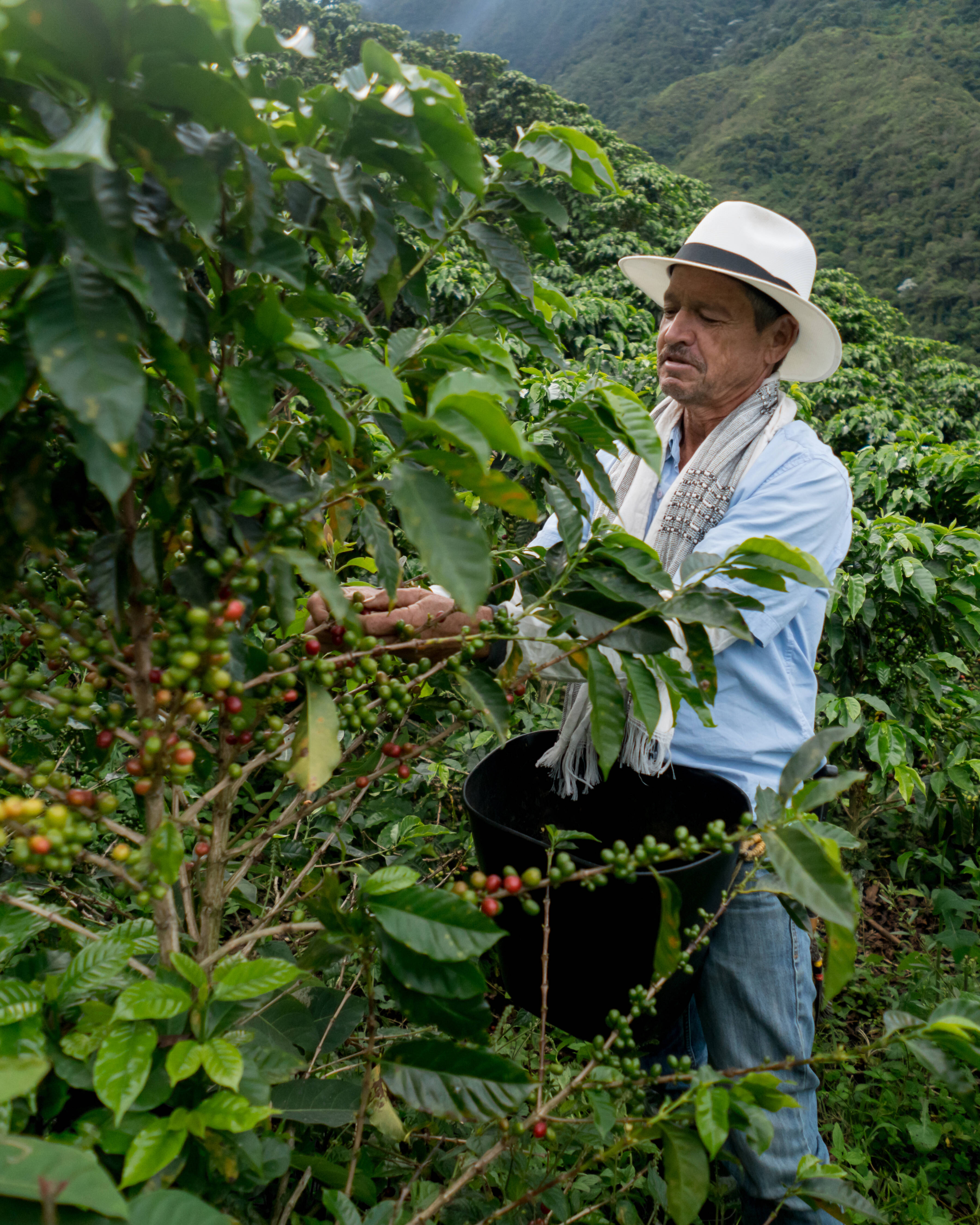
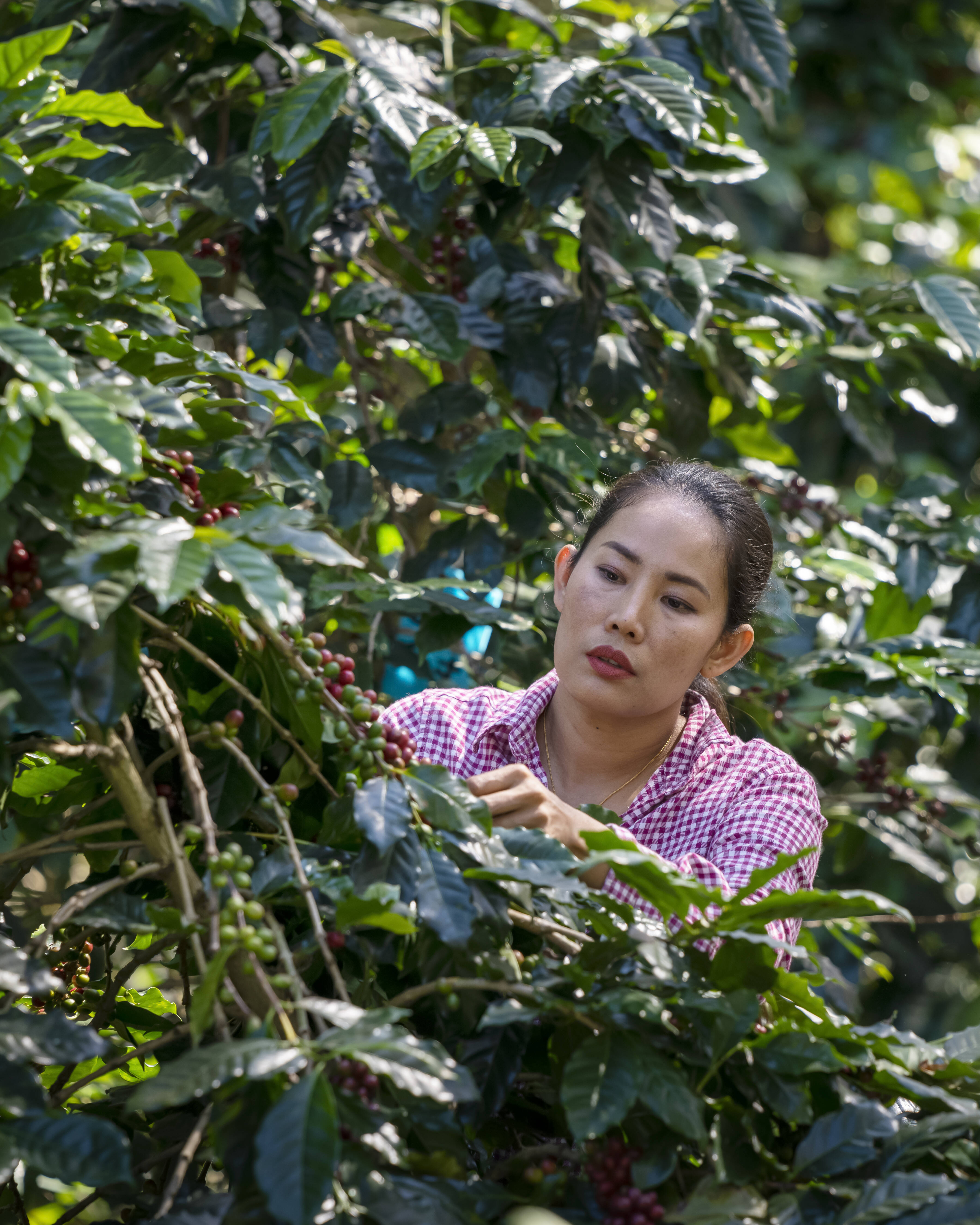
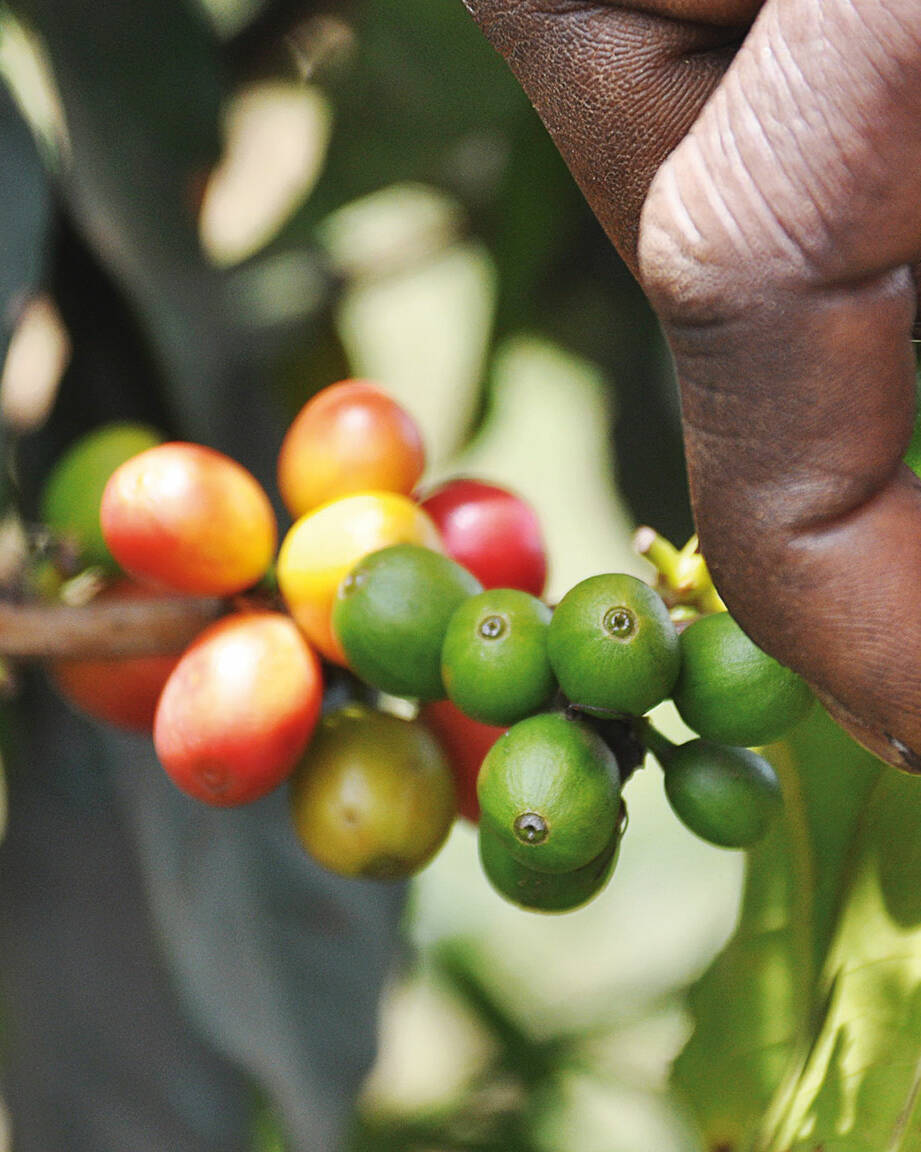
The cherries are mainly handpicked. Unripe and damaged cherries are sorted out and discarded immediately.
Processing after coffee harvest
Coffee is further processed using mostly one of three methods:
Washed coffee
1. Clean
2. Soak
3. Remove Pulp
4. Ferment
5. Wash
6. Dry
7. Hull
Most of the qualitatively excellent coffee varieties are processed using the wet method; this embraces most Central American coffees, as well as those from Colombia, Kenya and Tanzania. It is known as washed coffee or “milds”.
Unwashed coffee
1. Sort/Sieve
2. Dry
3. Split
4. Clean
The dry method, used largely in Brazil, West Africa and Asia, involves spreading the coffee cherries over large drying patios and leaving them to dry in the sun for 2 to 3 weeks. In certain regions, climatic conditions make it necessary to dry the beans with hot air, a process taking 2 to 4 days. As soon as the pulp is dry, the coffee cherries are brought to processing centres (“beneficios”), most of which are run by cooperatives. The coffee cherries are split open by the machines and the beans are removed.
Semi-washed coffee
1. Clean
2. Soak
3. Remove pulp
4. Wash
5. Dry
6. Hull
Some countries now also make increasing use of the “semi-washed” method.

In the “beneficio”, the coffee cherries are either sieved or preliminarily soaked in water (picture), to get rid of leaves, unripe cherries, stones, sand and other impurities. This preliminary soaking has nothing to do with the actual washing of the coffee.

Most of the pulp of the coffee cherries is removed in special machines known as ‘pulpers’. The remaining pulp is removed in fermentation tanks.

The fermentation process takes 24 to 36 hours and affects the taste of the coffee.

The beans are then washed until they are thoroughly clean. Subsequently the beans are dried in the sun or by machine (or, increasingly, in special drying houses).

The coffee beans are then filled into bags and brought to storage or processing centres. Before shipping, the beans are hulled to remove the parchment.

Coffee cherries are spread out to dry in the open air, and raked and turned regularly.

The colour of the coffee cherries changes during the drying process. Once fully dry, the cherries are dark brown to black.

The beans, once removed from the dried pulp, are sorted either by hand or by machines. Particular attention is paid to colour and size. Damaged beans are discarded.
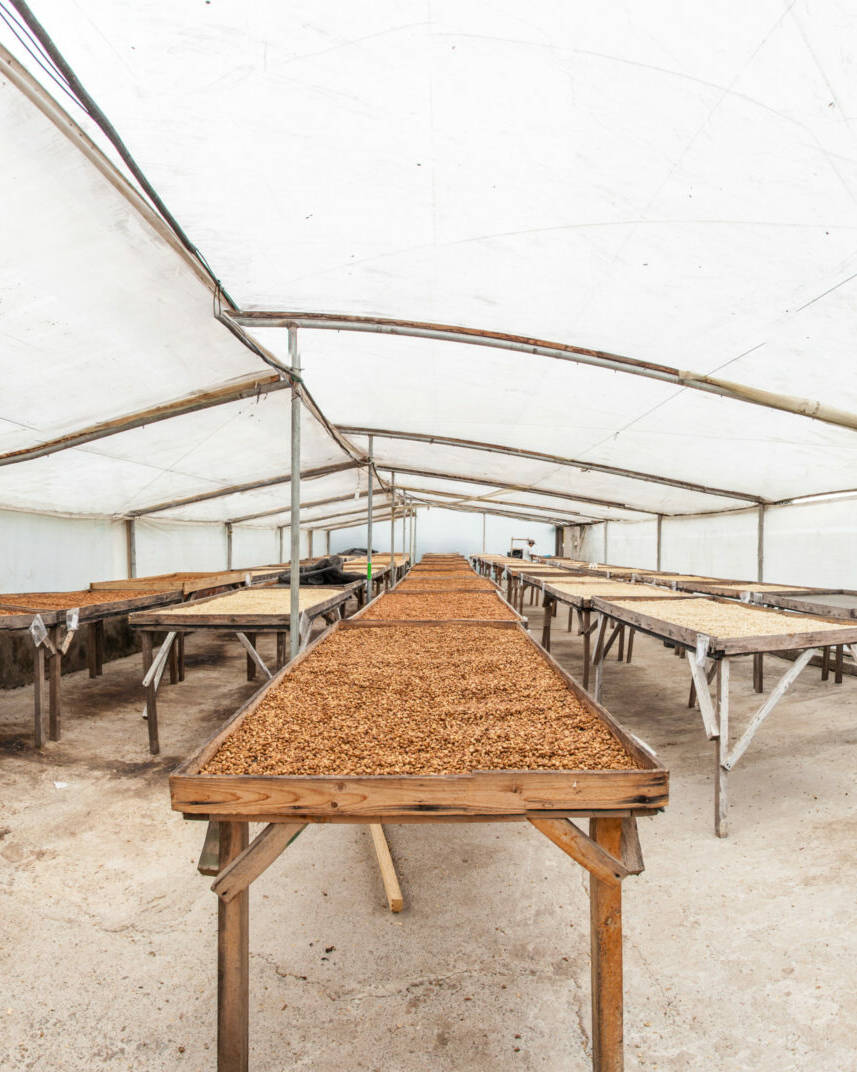
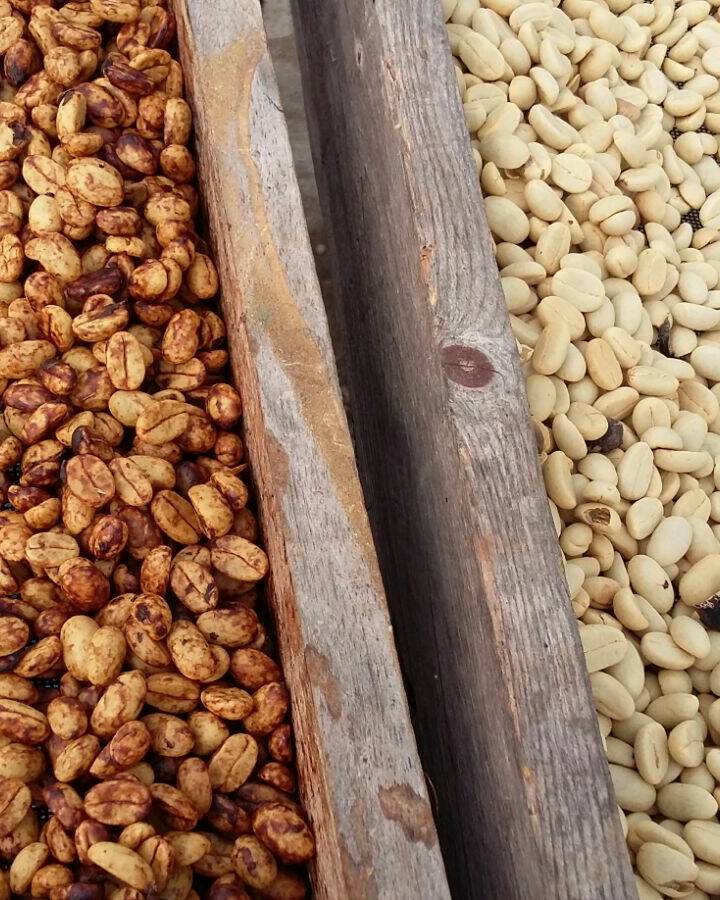

Swelling of the coffee beans in water

Red shells after removal of the kernels

Washing of the kernels (the coffee beans)

Removed silver husk

Drying of the beans in the open air
Quality control
Top-quality coffee requires testing to match
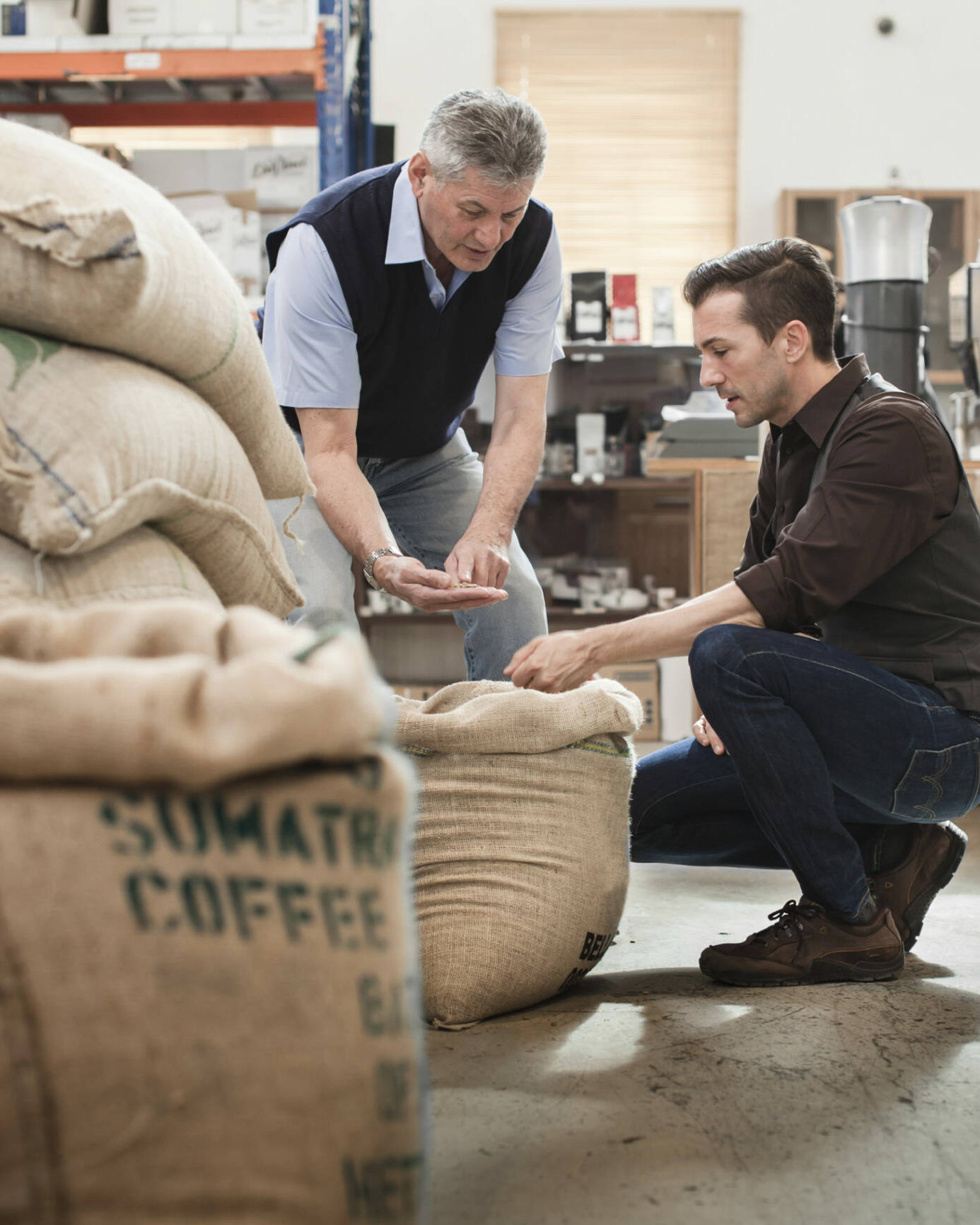
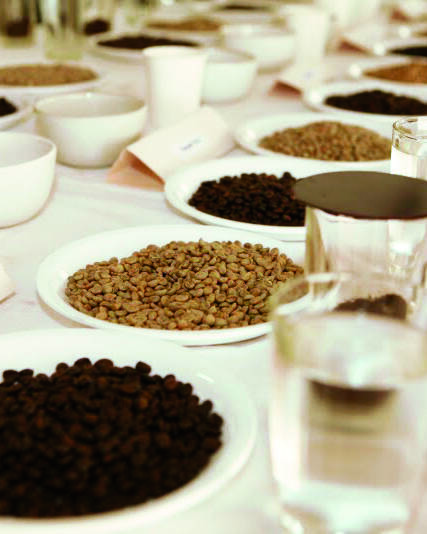
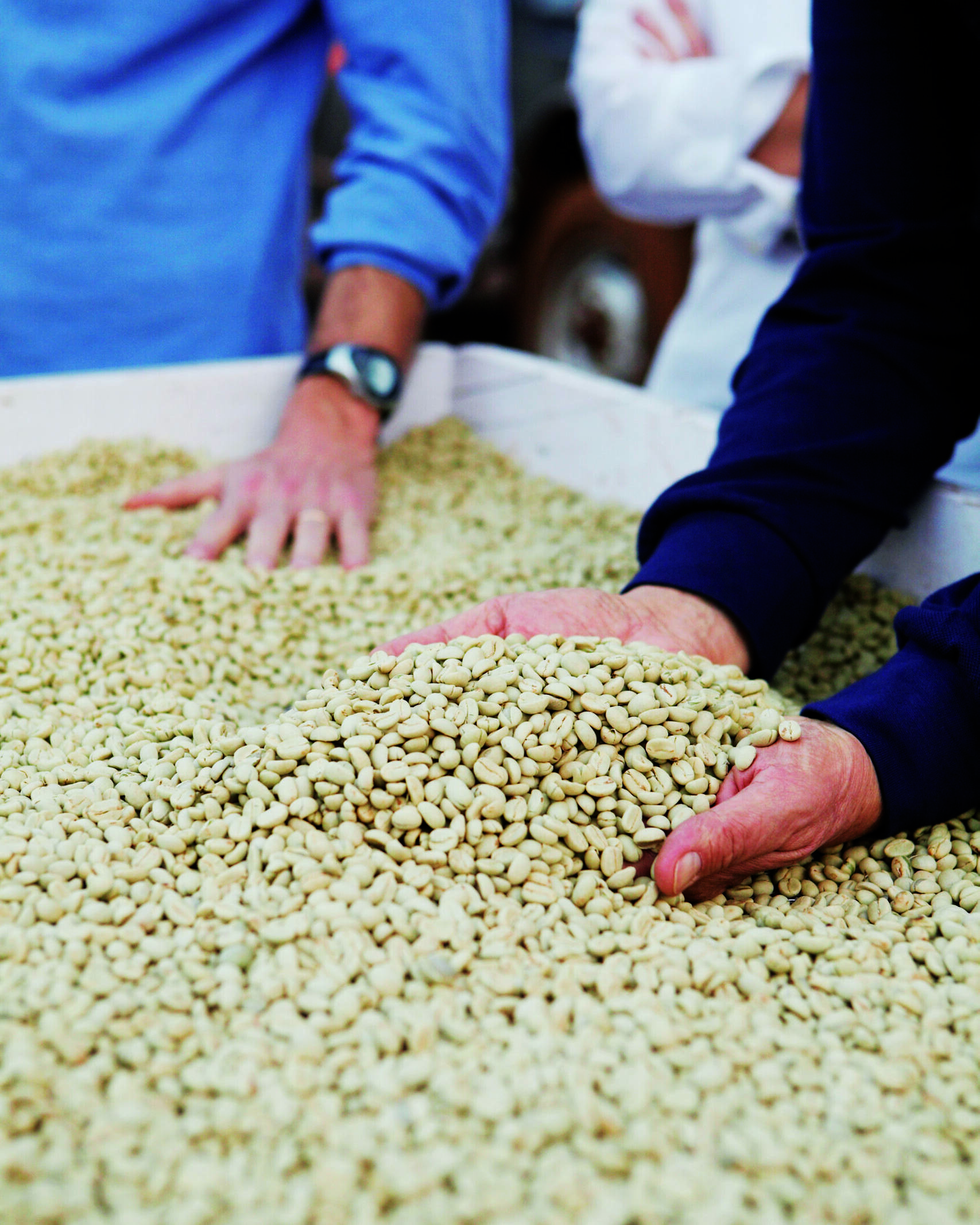
Samples are taken from each new shipment of coffee as it arrives and placed in small plastic sacks kept on hand for quality testing.
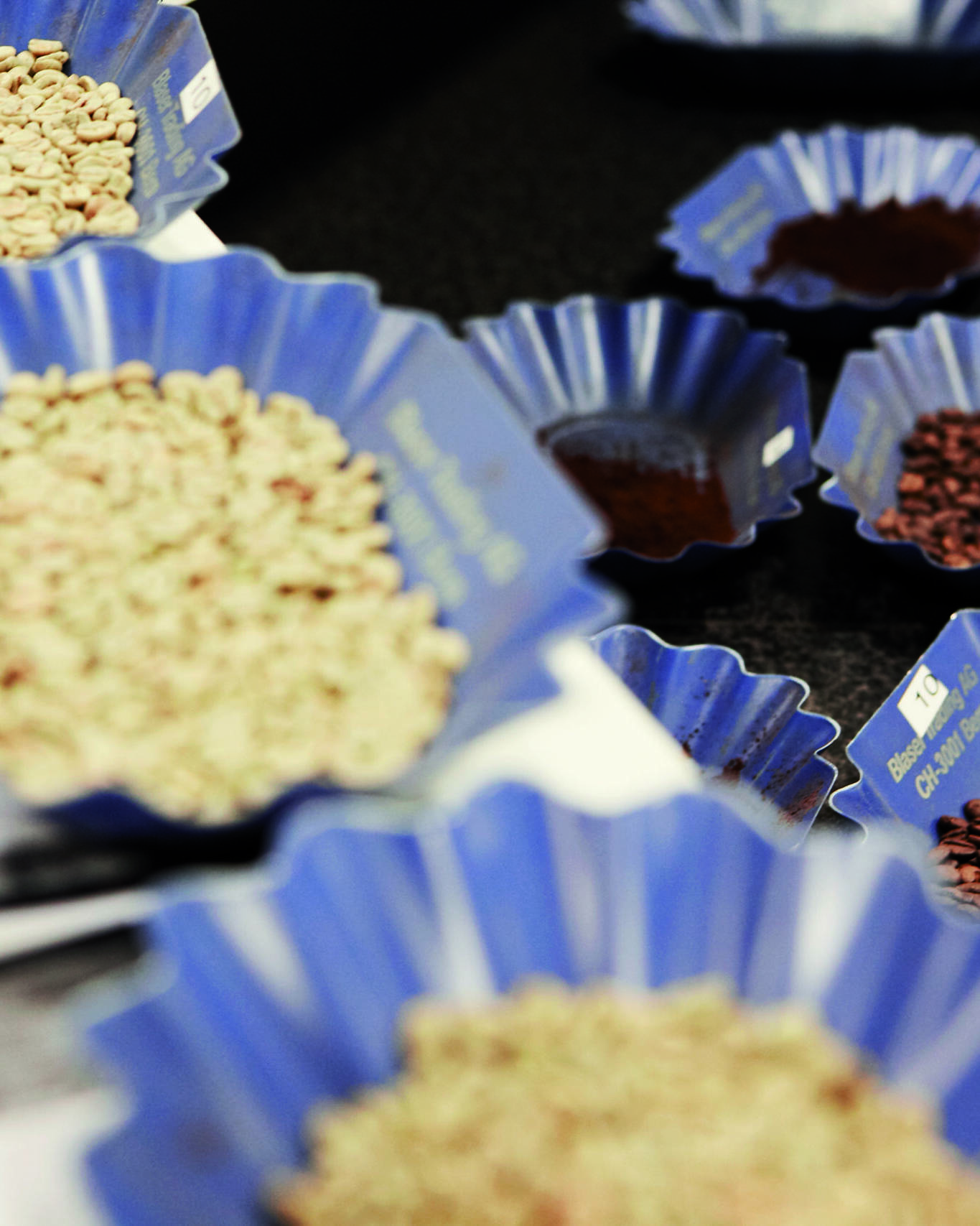
These samples are then split in two (minus a small amount for sample evidence purposes), after which one half is roasted and the other left raw. The coffee samples are then placed in sampling bowls ready for testing.
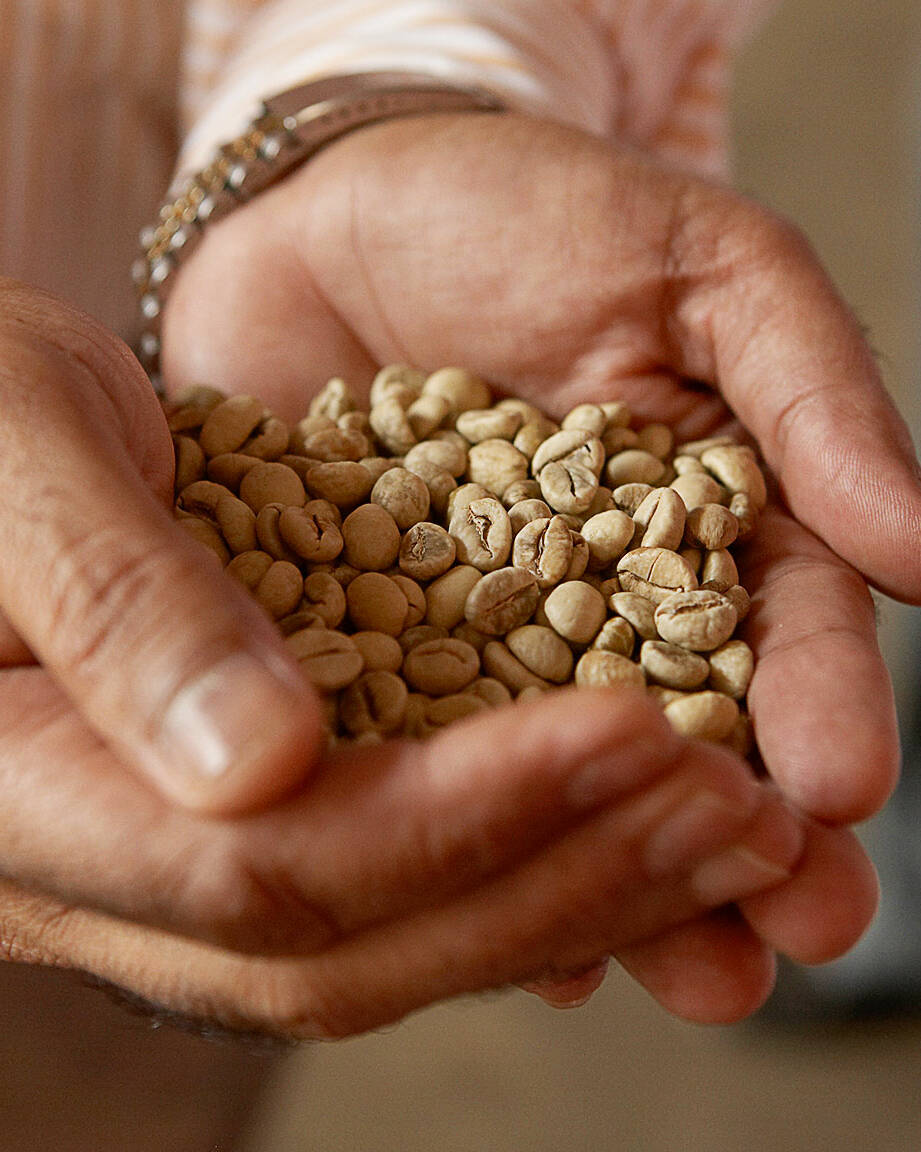
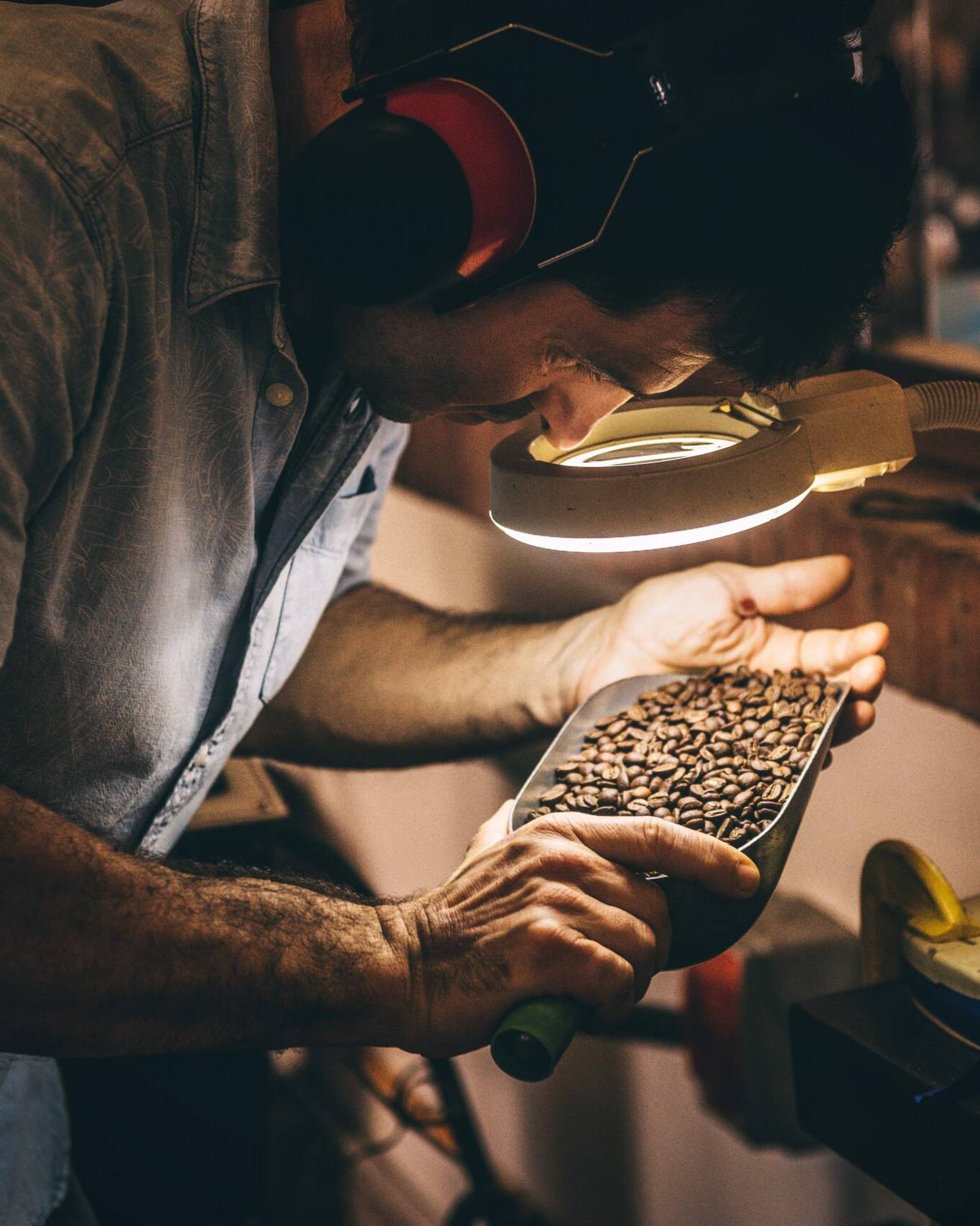
The colour and smell of the raw coffee help indicate its freshness. Testers also look out for uniform bean size, which is a prerequisite for even roasting.
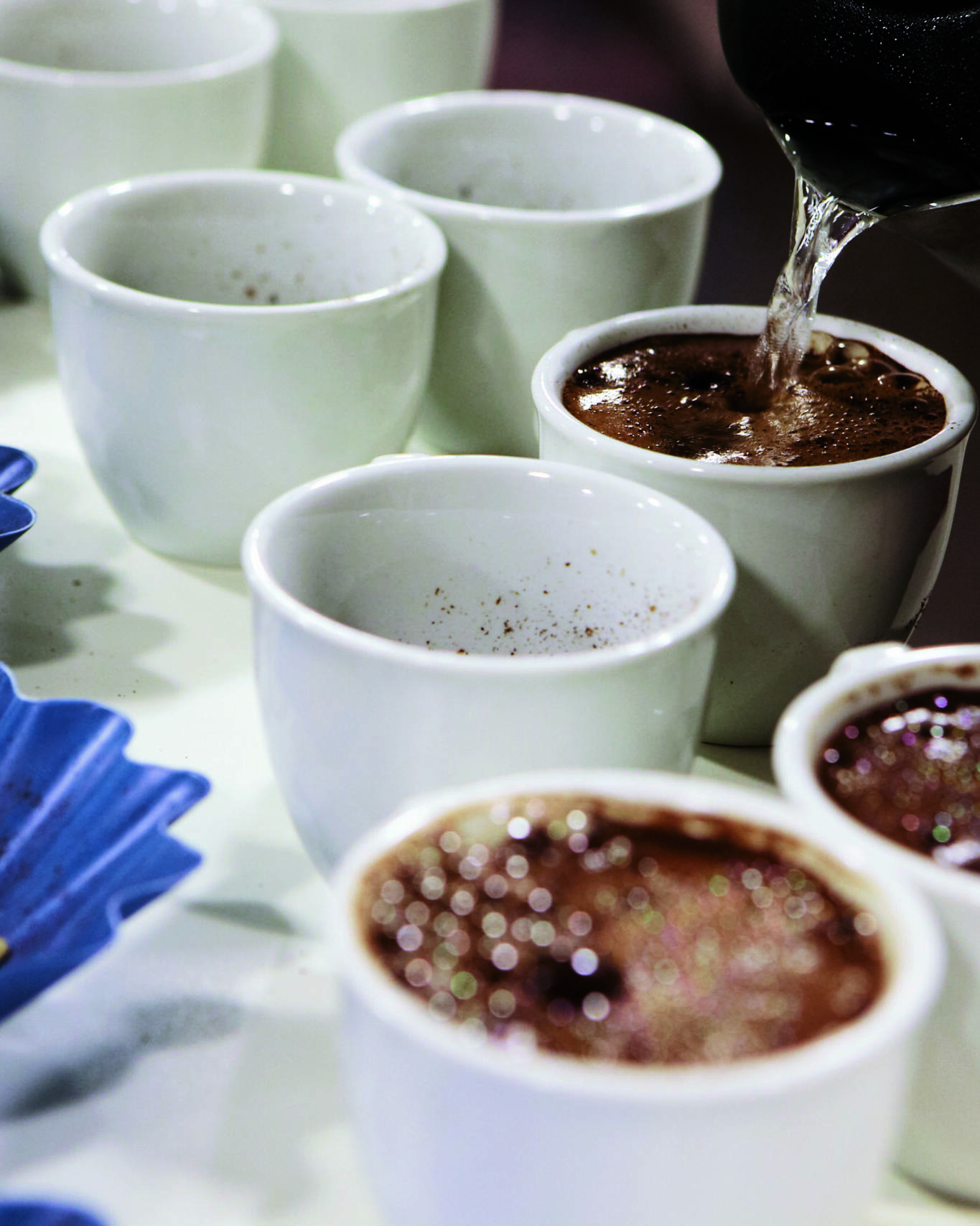
Once the roasted coffee has passed the tests of sight and smell, it is subject to the final, most important part of the process: tasting. It is now prepared as a drink for tasters to check its quality in terms of actual flavour.
Daily checks on production ensure that the quality of the coffee remains constant. No technology has yet been invented to match the efficiency and reliability of the human senses of smell and taste in this respect.
Take a look at our film “DEGUSTATION” on YouTube.

Blending
A touch of magic: the blend of green coffee
The blending of different types of coffee is a closely-guarded secret. The Swiss market, for example, relies heavily on the Arabica strain of coffee.
What is the key to successful blending? The first factor is of course the type of drink it is to be used for: latte, café crème, espresso, ristretto, cappuccino, etc.
Coffee blending is an art, which requires a highly-developed sense of smell, extra-sensitive taste buds and long years of experience.
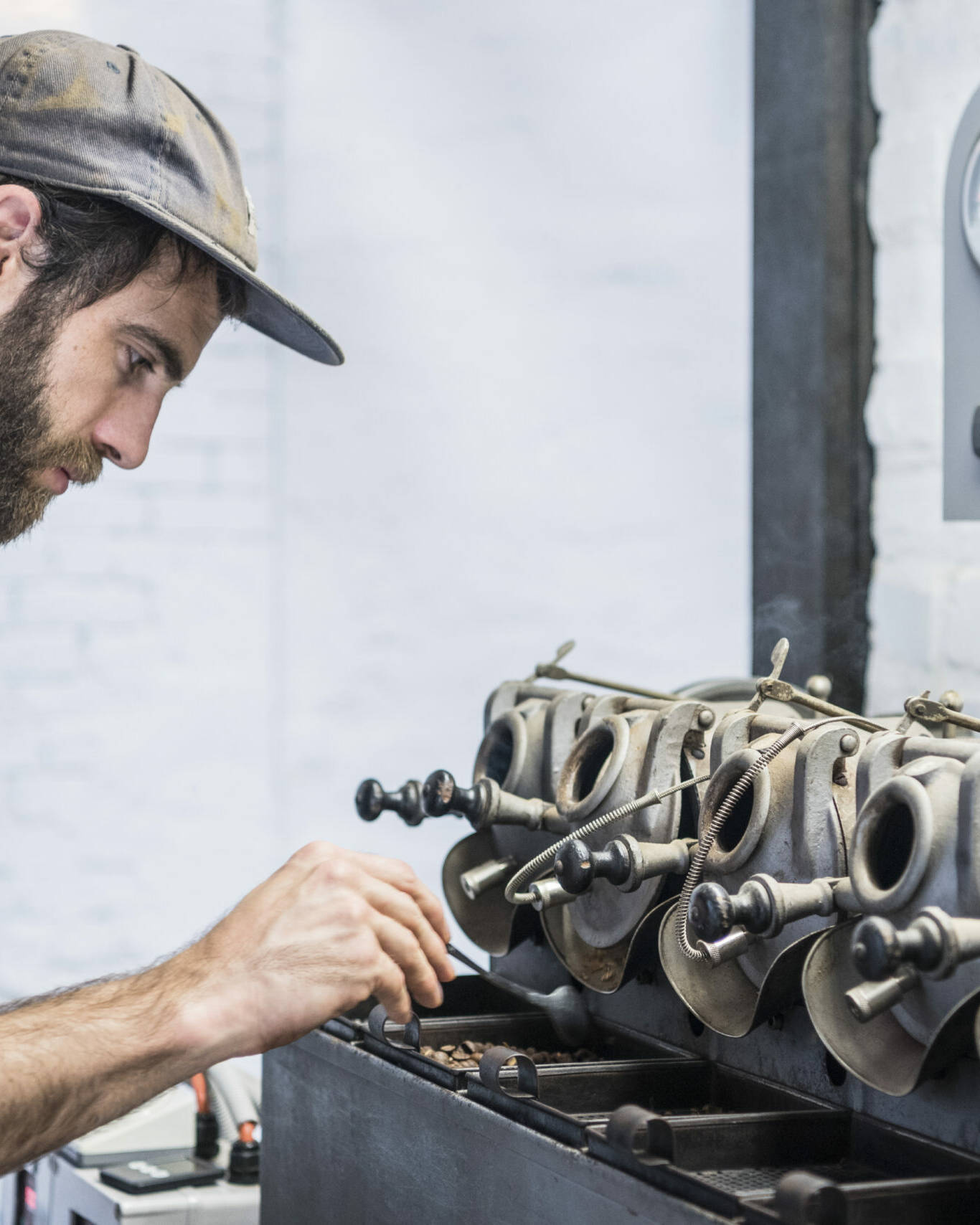
Samples are roasted and tested here. These tests serve as controls or for creating new blends.
Roasting
Roasting, a hot and important job
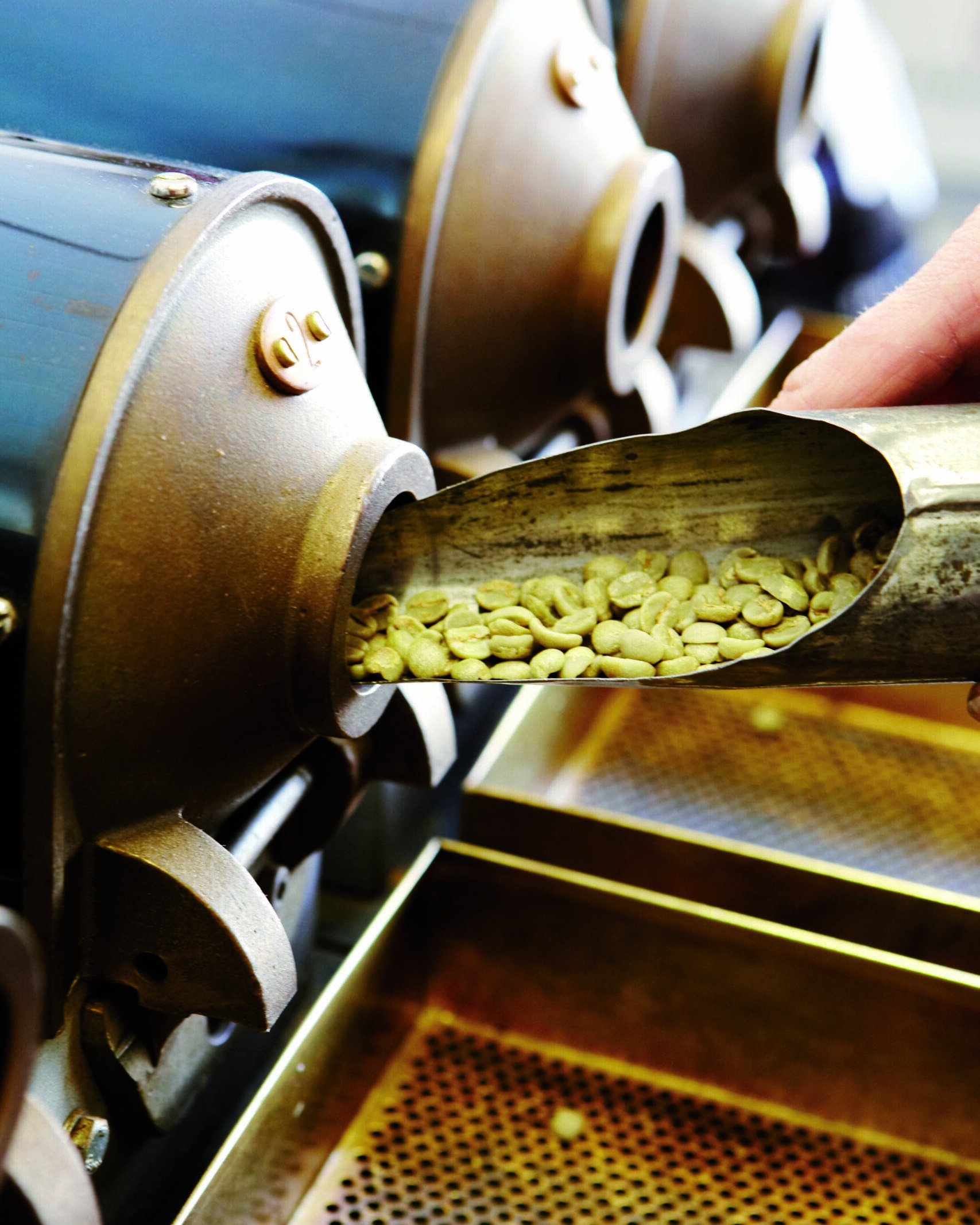
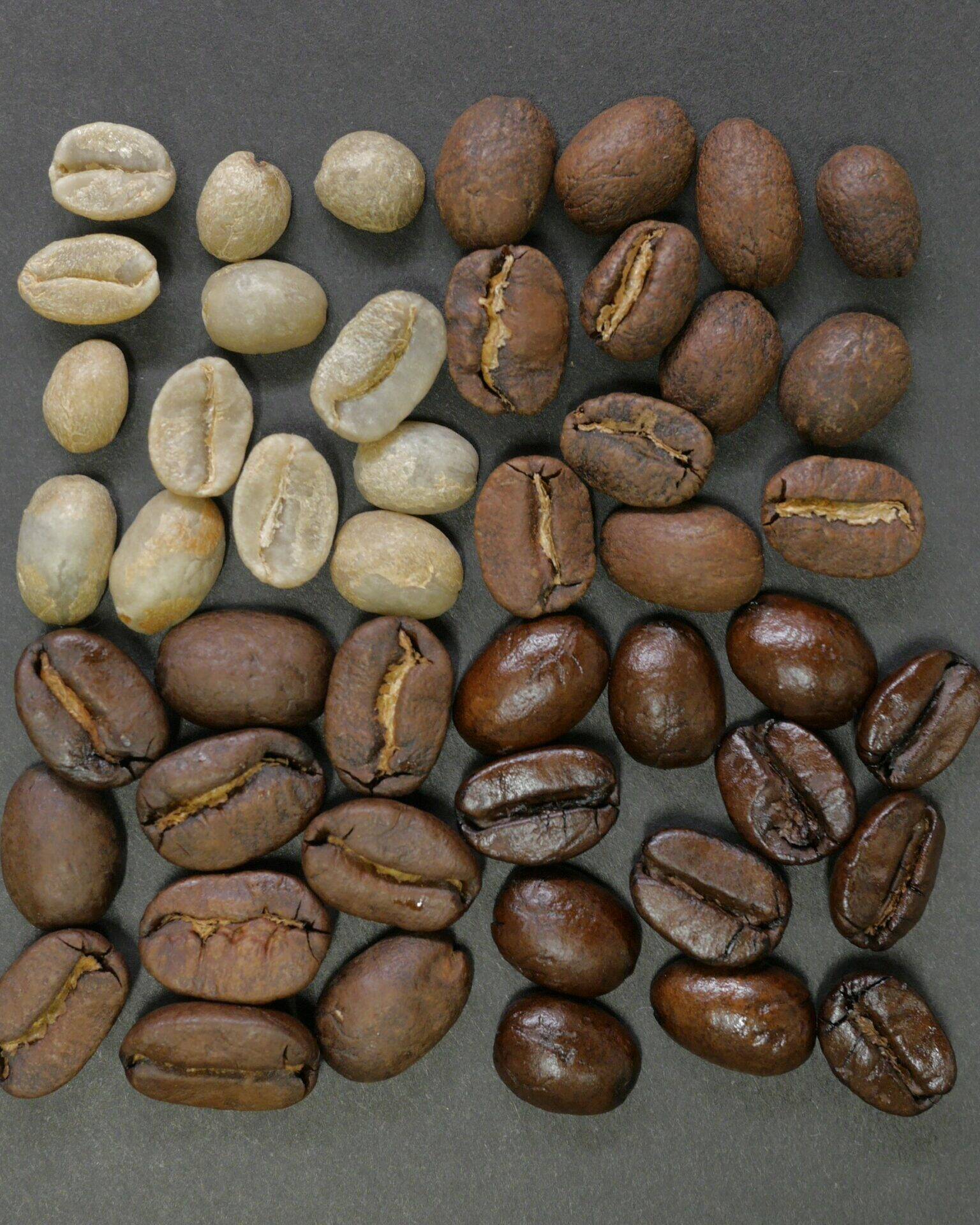
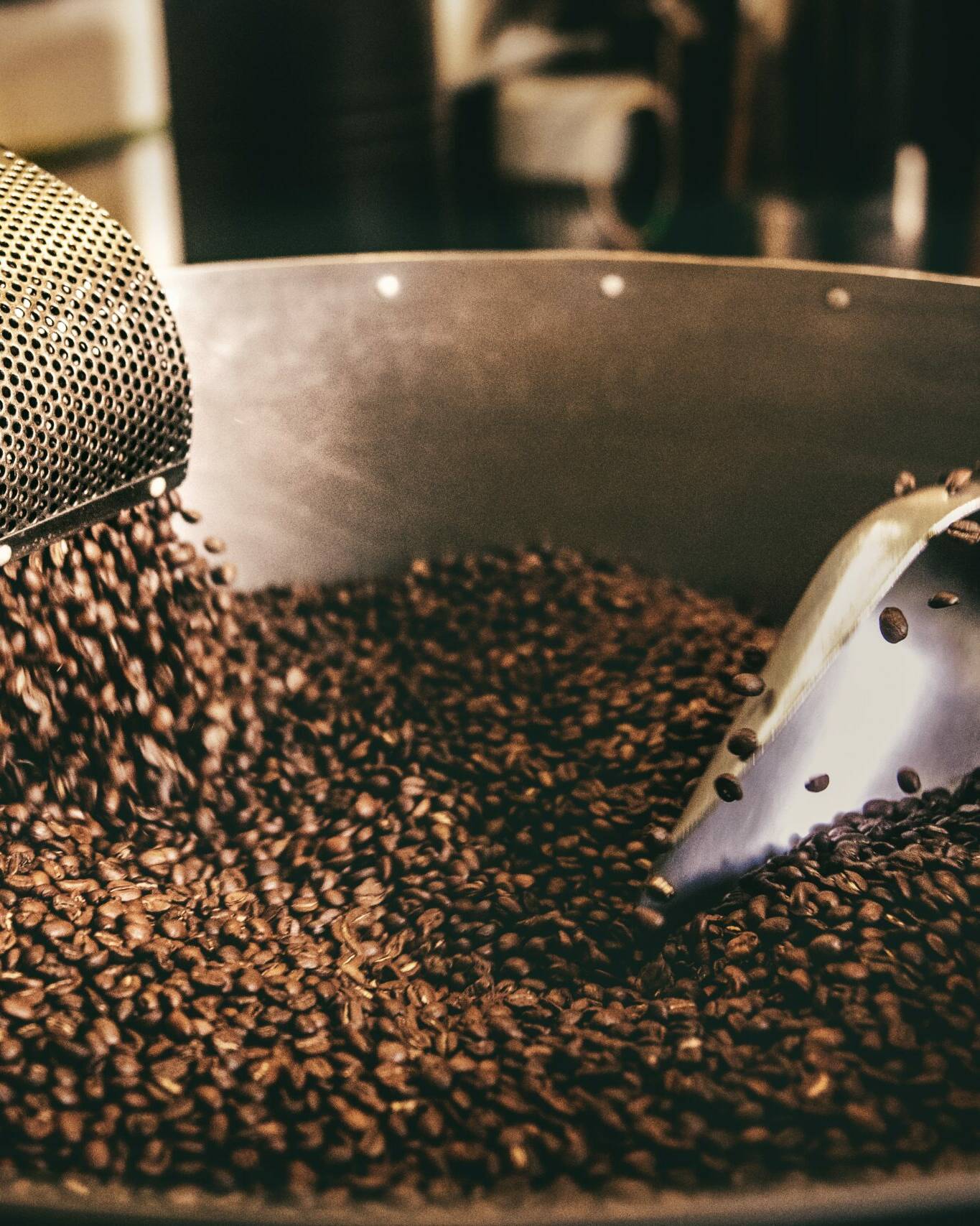
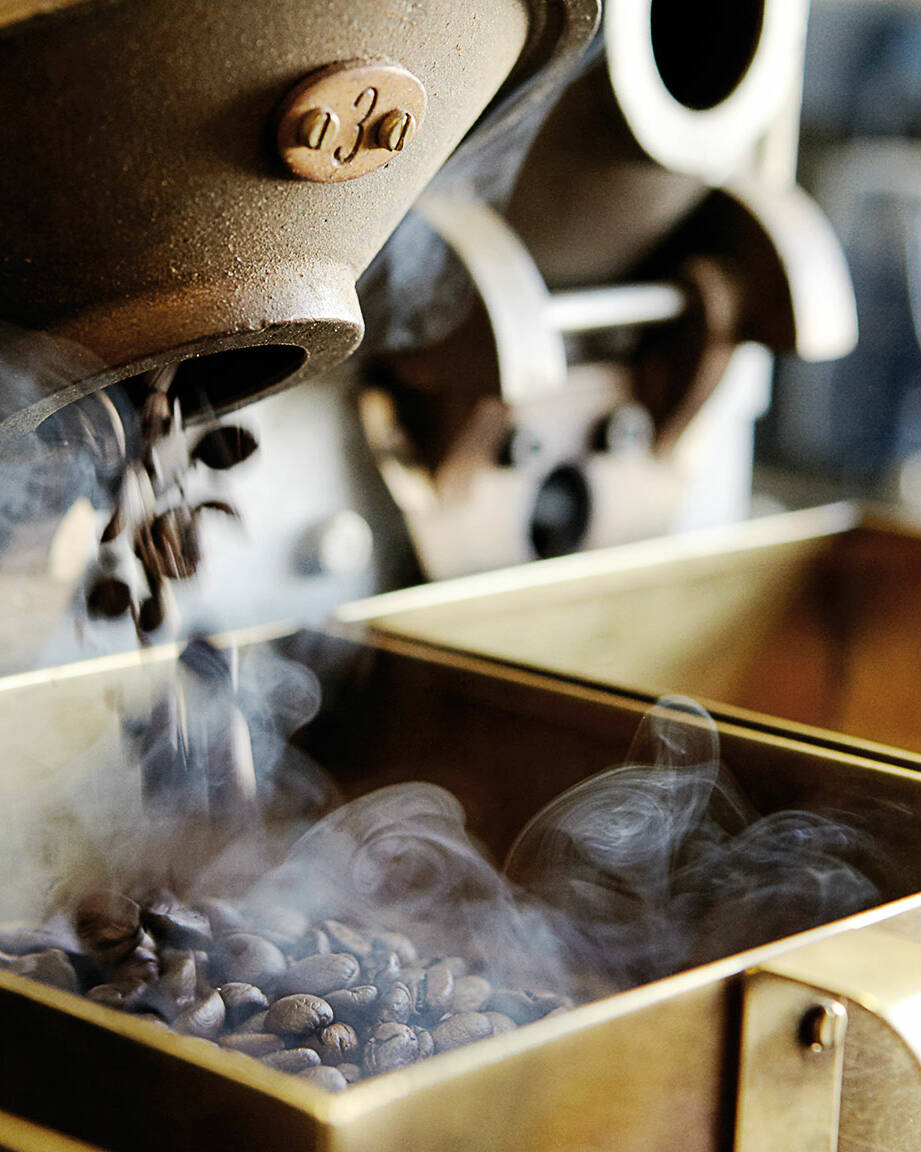
The wonderful aroma of coffee, its delicious smell and characteristic colour all develop in the roasting drum at 180 to 220° C.
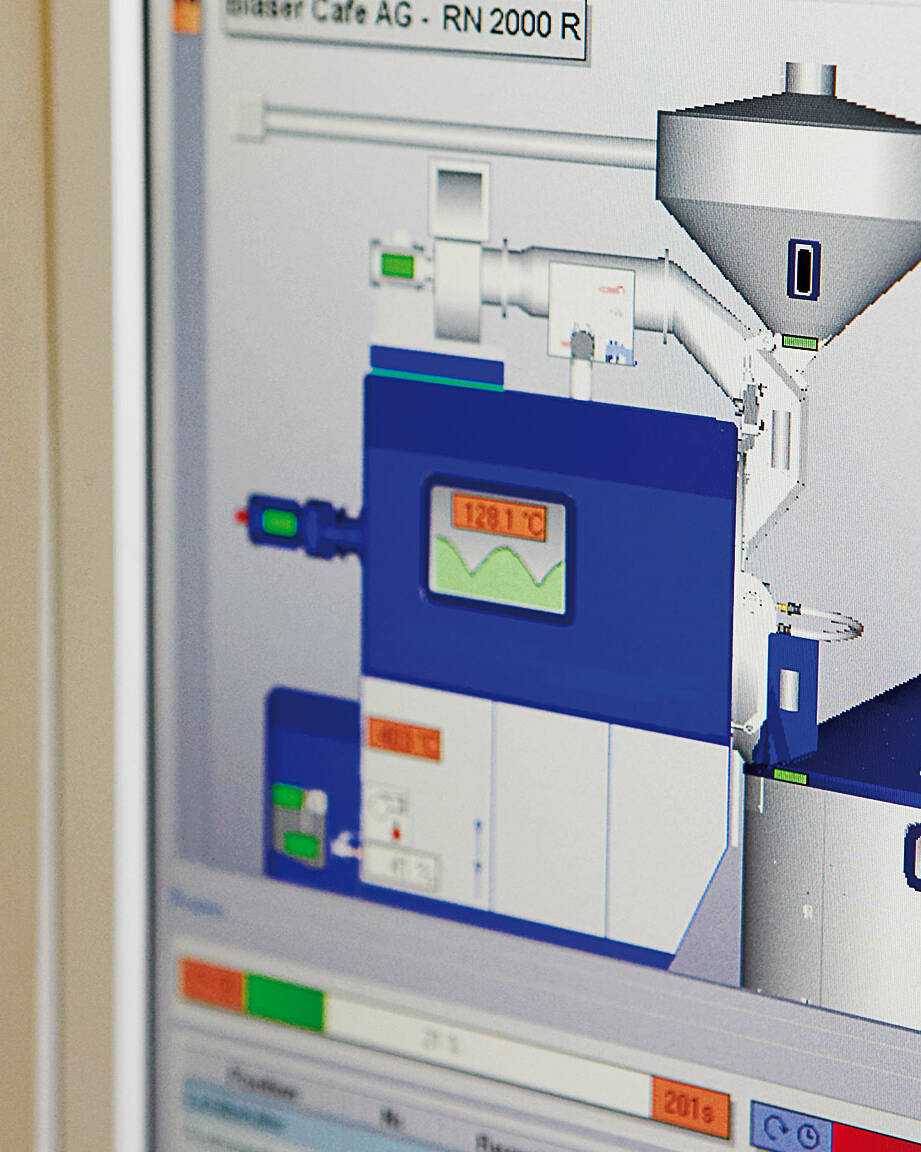
The roasting master has the most important part under control: the perfect and steady roasting of the beans.
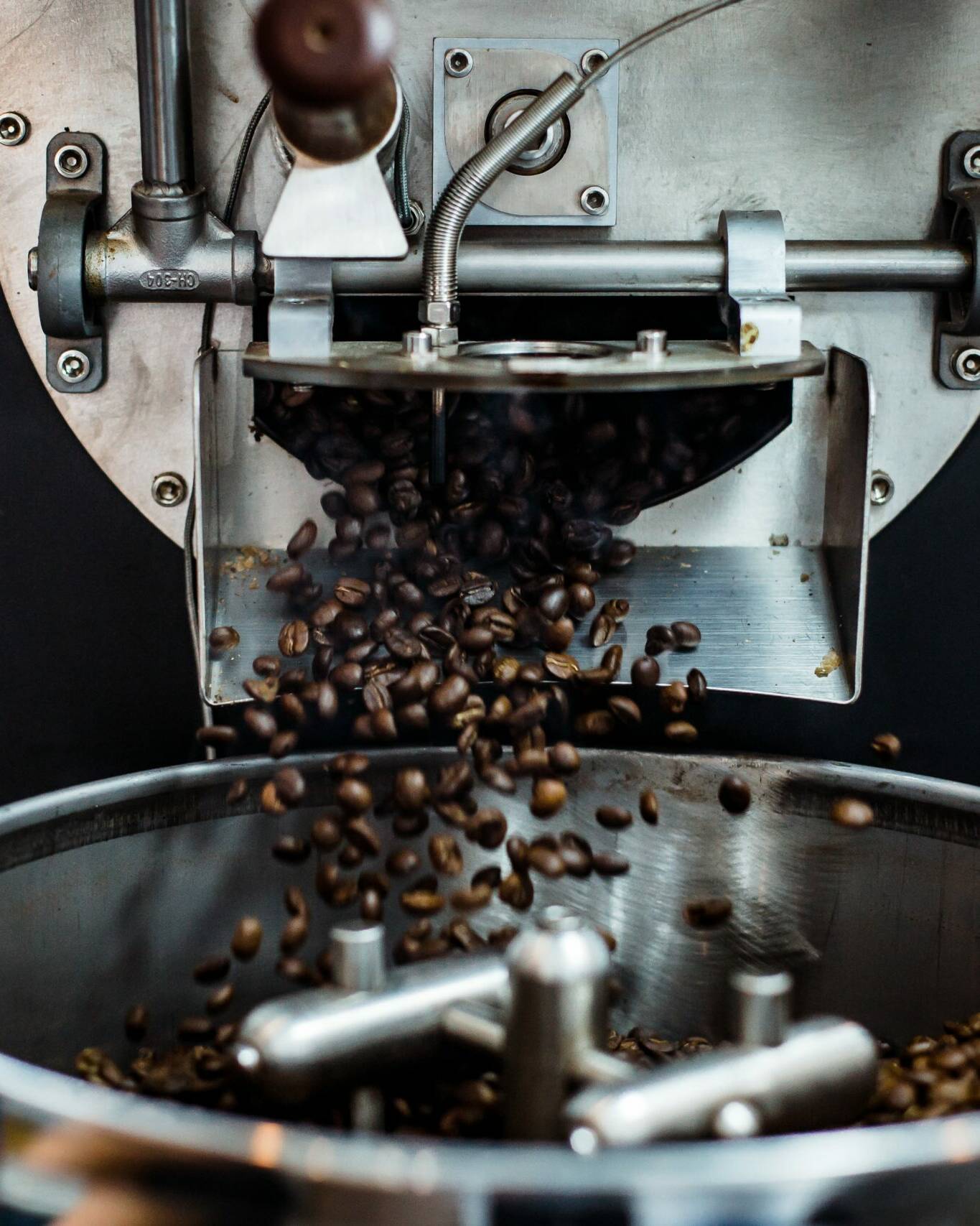
The roasting process, which is normally controlled automatically, relies on one of two main methods: The drum roaster, considered the more traditional of the two, with a roasting time of approximately 10 to 15 minutes, and the hot air-operated fluid-bed roaster (used mainly for larger quantities), which carries out the roasting process in less than 10 minutes.
Depending on requirements, appropriate quantities of unprocessed coffee of the different types concerned are sent from their silos to the weighing machine, which controls proportions in accordance with the blend formula being used.
The coffee is vacuum packed immediately after roasting, in order to fully unfold its wonderful flavour only at the decisive moment – in the coffee cup.
The roasted coffee is removed from the drum and placed into the cooling sieve. The revolving stirrers mix the hot beans for faster, more efficient cooling.
Daily checks on production ensure that the quality of the coffee remains constant. No technology has yet been invented to match the efficiency and reliability of the human senses of smell and taste in this respect.
Take a look at our film “Roasting and packaging” on YouTube.





Packing
Keep fresh
The oxygen in air quickly causes coffee to deteriorate and lose its aroma. In order to prevent this, the following packaging techniques are used:
Vacuum packaging
All the air in the pack is removed. This causes the contents of the pack to form a hard, compact mass, hence the trade term of “hard pack”.
Vacuum packaging in a protective atmosphere
The contents are packed in a process known as Modified Atmosphere Packaging, or MAP. The coffee remains loose and the package feels normal to the touch, hence the term “soft pack”.
Freshly roasted coffee beans produce carbon dioxide. A small valve allows this to escape, while preventing the entry of oxygen.
Decaffeinated coffee
Heartily appreciated: decaffeinated coffee.
Every coffee bean contains caffeine (1 to 2.5%), and some people react very sensitively to this. To enable such people to enjoy an appetizing cup of coffee, the beans can be decaffeinated using a totally harmless and natural process, which does not detract from the flavour in any way. Decaffeinated coffee must not contain more than 0.1% caffeine; most contain far less.
Soluble coffee
A clever solution: freeze-dried, soluble coffee.
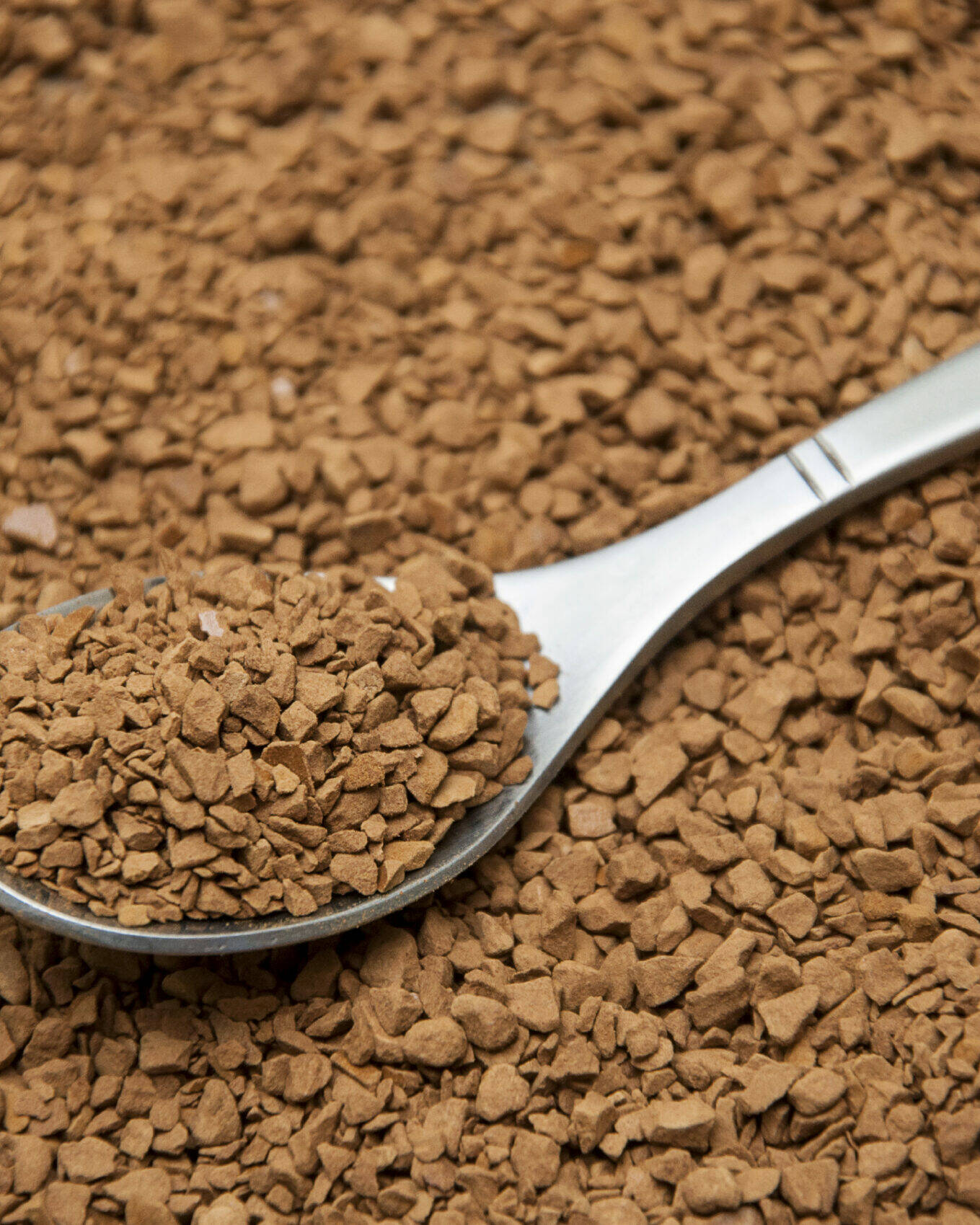
The freeze-dry method was developed in the 1960’s. It involves freezing liquid extract of coffee at approximately -40°C. When the substance is then re-warmed, a vacuum pump removes the water. This is possible thanks to electronic regulation of the warming process and the vacuum extraction. The process yields the well-known brown coffee granules.